Showing posts with label netbooks. Show all posts

Friday, October 22, 2010

What Mobile Heavyweight Suits You?

So you have to buy a new PC but the old one has still got life in it and could be retire to the office if you had the flexibility to work on the go without needing glasses or extra large thumbs. What do you choose and why?

The solution will almost certainly viewed differently by everyone.


Today the UK’s largest supermarket placed the Samsung Galaxy Tablet on pre-order at £529. It is just 99p cheaper than the offer from Carphone Warehouse and Amazon. Will that turn your eye as it clearly is the best equipped tablet out today with that 7” form, Flash support and Androd 2.2 all of which Mr Jobs doesn’t like. It has twin cameras and phone capabilities and will start to make an impact on Monday, November 1st. If you want a tablet with legs look no further.


HP have just announced more on its long awaited Slate tablet which to the surprise of many is to run on Windows 7 not Palm’s WebOS. Its only a surprise given the ticket HP paid this year for Palm and begs the questions why and where is it going? The price on the tin is $799and will weigh in at 700 grams, with a 8.9” 1024x600 screen and with not only no 3G connectivity but the unproven Windows 7 fanfare. However it does have some impressive feature such as an intuitive Wacom digitiser. If you want a high end netbook with touch screen and tablet form look no further.

So what about the new updated 13.3” Mac Air or or its new 11.6” brother? Both come with no hard drives but instead use flash storage built into the motherboard. Both models are thinner being only some 0.68” max and tapering to just 0.11” some 0.10” less than previously. The same applies to weight with the 11.6” model weighing in at 2.3 pounds and the 13” one at 3 pounds. The Macbook Air has a full size keyboard and trackpad. The real difference is the flash storage which reduces weight, is more rebust gives more space for a bigger battery. The result is the claim from Apple that the 13” model can give some 7 hours and the 11.6” some 5 hours of battery life on a single charge. The flash storage also gives a near instant switch on and its claimed that you can leave the machines in standby mode for up to 30 days!

The MacBook Air certainly is packed with many new and improved features and if you are a Mac man looking for that portable solution it will be hard to beat. The price of the 11.6” is £849 rising to £999 for the 128GB model, whilst 1.86 GHz 13” with 2GB of memory and 128GB of flash storage starts at £1,099.00 rising to £1349 for the 256GB model.

Another interesting consideration is that of operating systems with mobile battles raging whilst the rest mainly divide between Mac and Windows. However Apple has now previewed its next major OS version called Mac OS X Lion and positioned it to arrive in summer 2011. Jobs claims that Lion is about "Mac OS X meets the iPad." Lion will deliver a Mac App Store , similar to the App Store for the iPhone, iPod touch, and iPad. This will enable users to purchase and download apps as they do today with a one-click download and automatic updates. Apple now plans to open a Mac App store this year for use on Snow Leopard.

So would you buy an iPad, a Galaxy, a slate or a new MacBook Air or something else?

Tuesday, September 29, 2009

So Which Device Has That X Factor?

So what is the coolest gadget and what do we want for Christmas 2009? Yesterday the iPhone was anointed the number one of ‘cool’ in the UK, but that was like stating the obvious and the challenge is to understand what will be the number one tomorrow and some of the dynamics that will help it achieve the converted status. What will have the X Factor?

There are a number of consumer factors that will always decide as to whether the device is a winner and a ‘must have’, or is a another ‘also ran’:

Look and feel – image is important in this ‘designer label’ age. Skoda may make great cars but they do not have the same cache as Mercedes or BMW. Apple has always had a strong iconic brand which has been built on design and functionality. If Apple were to launch a tablet device tomorrow it would be a success because it is Apple as its solutions are 100% image and 80% functionality.

Convenience – for convenience read convergence. Women want a device that will fit in a handbag, but still leave room for the other essentials of their life, whilst men really want it to fit in their pockets. One device is a must, two starts to become difficult and three is a bridge too far for many. So what do we all need on the move? A phone and after that email, text, office basics and then access to information, music, content, photos, video , games etc. Very few of us now carry a camera – it’s in the mobile. The MP3 player may have had its day and many single applications devices will follow. The key is that they start as standalone devices and then flip. The eInk devices may be easy to read in all conditions, but with OLED coming fast to small screens, their advantage, even in this area is not sustainable. Anybody who has read a book on an iPhone will tell you it isn’t hard to adjust.

Price – this is a major player once the device becomes commodity but is not so important if the perceived value is high or the device is in the early stages of its market.

eInk readers are transitional devices and although the technology gives them the edge today they act and look like the old clunky 8 track players of the 80s. Their major plus is the screen and its readability and power saving, but the major minus is the screen as its black and white and no matter how many greyscales you add its still black and white. The device can do much more, but then it starts to compete with other devices that can do a lot more. We think the device is a short term toy that readers will grow out of and will age quickly.

As more gets loaded onto the smartphone then the power demand grows and the tedious task of recharging becomes more frequent. However the screen size and quality is getting there and with new technologies such as OLED will make it. Not only can it play it can record. Not only can it show photos it can play video and all in full colour. The challenge is that the market is fragmented, and we have issues on operating systems, browsers, exculsive carriers and of course applications. The iPhone has show what can be done and is guaranteed to lead the way for some time to come.

We all want a tablet or a device that is half way between everything and can potentially offer that single device on the move. Apple is coming sometime, Microsoft is now threatening to spoil their party and you can guarantee that others have seen the opportunity. When is a tablet a smartphone and when is it a netbook, or a ereader etc? What is clear from the hype over the Apple tablet is that is what the market demands and if positioned and with the right support offer and price we could have a clear category killer. Anyone who has doubts click here and watch this video from Gizmodo.

Netbooks will appear and offer much for the office man on the move, but the right tablet and even smartphone render them limited in their appeal. Perhaps size does matter and big is not as good as small!

Game machines are the one dark horse. Should games migrate onto smartphones and tablets or do they offer a reverse path? We have seen Nintendo toying with ebooks, but in a half hearted offer. When you see devices such as the PSP it makes us wonder why Sony don’t develop the device for digital content. Perhaps they think that once a gamer, always a gamer and a dedicated device is needed, but is this reality or an historic viewpoint?

What is clear is that the device wars go further than ebooks. We remember that Betamax was a superior technology to VHS but failed because they didn’t invent the consumer camera, MP3 is inferior to many other music formats but is more widely available on devices and DRM free. Winners don’t always follow convention logic but they strangely can be predicted.

Saturday, May 16, 2009


Asus has launched the Eee PC Seashell slimline netbook in London. The 10” LED screen, has a power-efficient Atom N280 processor, 1GB of memory, 160GB hard drive, multi-touch trackpad, Windows XP Home and Microsoft Works. It weighs a mere 1.1kg, and is claimed to run for up to 6 hours. Asus are primed to also launch a number of other EEE related products in the next few weeks.


The 1008HA Seashell is clearly one of a number of Macbook Air and MSI has also announced its ultra-thin X340 and X320 notebooks will be released in the UK at the end of May. These weigh-in at 1.3Kg and measure 330mm x 224mm x 19.8mm. The X340 and X320 both offer widescreen 13.4The disappointment is the price with the X340 predicted to cost around £850 and the X320 and around £650.

Wednesday, May 13, 2009

Dell Deliver the Mini10 Netbook

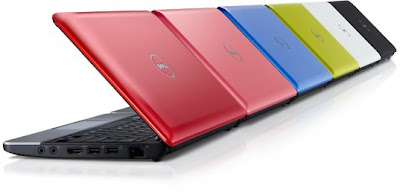
Dell has announced the arrival of its Mini 10v netbook which is now available on it website. So the netbook market is starting to hot up and we remind ourselves that these aren’t a replacement for the laptop today but will provide that portable device that is capable of much more than a mobile, significantly more than a greyscale ereader or any dedicated device and weigh little and have a small footprint. The quest is to get the price right and ensure that the accessories are bigger than the device itself!


Dell have launched the Mini series in a variety of colours, (Ice Blue, Cherry Red, Jade Green etc), with hard-drive space from 160GB and 1GB memory as standard, built-in webcam, new internal 802.11b/g WiFi connection , Bluetooth connectivity and a choice of Linux Ubuntu or XP operating systems. The screen is 10.1”, a 16.9 ratio and can be connected to a larger screen or TV and is around the size of a large ereader but with colour and much more! The keyboard is 92% the size of a normal keyboard and is ‘spill resistant’! The weight is under 3 pounds and it claims extended battery life. The price starts at £199 which for a new product is fair but is now likely to drop as more come onboard.

Interestingly Dell have also announced the Inspiron 15 a laptop with 15.6-inch HD display, a 'large' hard drive and DVD burner and are priced from £299.

Tuesday, March 03, 2009

Can I UseYour Screen Please?


Just when you thought that the keyboard was going to die and that touch screens were the new thing Asus have caused a stir at CeBIT with a keyboard!

Reality is that it isn’t a keyboard so much as a PC inside a keyboard. The thin case host in side of an ASUS netbook, sorry Psion we forgot, n**book. It has a 1.6GHz Intel Atom processor, 1GB of memory and a 16GB/32GB solid-state drive, weighs under 1kg, it's suitably light, has a built-in ultra-wideband transmitter for wireless streaming to external displays. It claims to work within a range of 15ft. However if you can’t find a screen it has a 5” touchscreen with 800x480 resolution.

It's still at the prototype stage, but expected to be fully launched later this year. So has Asus come up with the perfect answer – separate the screen from the n**book and enable users to choose how they display. Connect it to a TV, monitor, eink device a stop trying to develop an all in one solution. However one could apply the same logic to a mobile.

Monday, March 02, 2009

What's in the Name - Netbook?

We can’t use the term netbook and will find another word for it. Perhaps; spacebook, notebook, mini-laptop, handtop, handbook, whatever.

Apparently Psion trademarked the term in 1996 for their Palm 5 palmtop replacement the Palm 7. Obviously the name nettop just didn’t work. Psion launched the netBook in 2000 and a further netBook Pro was added later. Now the term is in wide use and some 38 vendors use it to describe their devices.

Psion has convinced Google to ban the term from adsense ads, and it filed a large number of ceast and desist orders against a great many companies threatening more aggressive action if competing firms didn't stop using the term. Dell has now filed a suit against Psion to be joined by Intel with a strongly worded broadside filed in the US District Court in the Northern District of California. Intel who own the domain netbook.com, which is linked to their Atom marketing site, demands an immediate judgment to cancel the trademark.

Lets just create a new name and ensure its public and avoid those lawyers fees and costly settlements. We think ‘smartbook’ may work as it halfway between a smart phone and a ***book but that looks to be taken too!

Tuesday, January 06, 2009

Android May Not Just be For Mobiles?

Whilst much focus is on Google’s content grab they continue to move forward on other fronts. Last week, VentureBeat’s Matthäus Krzykowski and Daniel Hartmann loaded Google’s Android operating system onto an EeePC10000H netbook. This not only proved the concept but when loaded Android was able to use the onboard graphics, sound, and wireless capabilities of the netbook.

Last month the system was ported to Nokia N810. So while Android is a new mobile operating system it now appears that it is capable on running on many PCs, laptops and netbooks. Although Android is developed on Linux it does not use Linux X Server graphic drivers, which means that standard Linux applications that use the X Server, must be first be ported to the Android system in order to work. However most Linux drivers are reported to work under Android so the port to netbooks is relatively easy.

So where is this all going? Tech Republic suggests that the combination of Chrome, Android and Google Desktop could result is a full operating system push, ZDNet speculate that Google could effectively create new revenues from selling Android application on PCs.

We can’t say where this will go but with more Linux based devices it looks probable that Google is aiming for a bigger slice of the market than just mobiles.

Wednesday, November 05, 2008

So Where Do NetBooks Fit In?

The Netbook is becoming the portable device for many. It is ultraportable, an inexpensive laptop designed for Web browsing and light tasks. Now Hewlett Packard (HP) has unveiled its new mini notebook in its move to cash in on this fastest growing PC category.

HP's sleek new Mini 1000, costs around $400, uses Intel Corp's Atom processor, and signals a potential price war in the netbook market. Netbooks are still only a fraction of the 300 million PC market but their growing popularity could lead to further market changes with smaller players such as Acer gaining ground on HP and Dell. Analysts predict that 10.8 million netbooks will ship in 2008, and jump to 20.8 million in 2009.

The target market for the netbook is still undefined with education being one of the obvious areas but with the consumer market being less certain. Will users use the notebook for travel and a larger laptop or desktop for heavier usage? What is certain is that the laptop is shrinking and the potential of the notebook is growing. It would be logical for the notebook to merge with the current ereaders and offer a portable device between the mobile and the laptop.

What is clear is that single dimensional devices such as the current ereaders have another competitor in the market and one that will have more appeal to a wider audience. Interestingly the notebook looks certain to compete head to head with the ereader in the educational space.

Friday, June 06, 2008

Netbooks?


OK, we have said many times that its time wake up and smell the coffee and unless ebook reader devices prices drop below $100 they are just transient technology and frankly no more than toys for executives and novelties for geeks. That doesn’t mean that digital publishing is a waste of effort, very much the contrary digital publishing is about the total publishing process not the delivery mechanism.

Today for the price of a regular notebook, PC manufactures can supply smaller and simpler laptops. The Computex trade fair in Taiwan, is now showing ultra-portable models and more are expected in the second half of the year. Remember the Mac Airbook? We all wanted one, but they were expensive. Now prices for lightweight and effective laptops are dropping. Analysts predict that low-cost computers, between 7-10 inches and weighing about 1 kilo, could end up replacing regular notebook PCs. They aren’t predicting tens of thousands of shipments but tens of millions. Most of the new low-cost laptops, running on Linux or Windows XP operating systems, will be in stores this summer, and some analysts say they could resurrect a flagging PC market.

Intel’s Atom chip based products are to introduce Mobile Internet Devices (MIDs) which we have already written about, but they now also plan two new system tiers they call "netbooks" and "nettops." These new systems will fit below the standard laptop/desktop markets and are compact mobile devices focused today on children, first-time Internet users and people who desire an extra PC can use for basic computing applications, listening to music, e-mailing and surfing the Internet, playing basic online games, social networking and making voice over IP phone calls. Why not add reading ebook online to that? In fact think of the potential in education and academia or other social mass groups that desire low cost access.

Intel’s Atom has competition from NVIDIA’s ARM based system-on-a-chip, codenamed Tegra and the VIA Nano. VIA, like Intel, is also capable of providing a comprehensive chipset/graphics/processor combination, and at a cheaper price.

Some may say that all this could seriously question the ebook reader in its current form. After all why have a single application devise when you can have a multi functional one that is fully wireless, light and does everything you need for the same price? Some may say you need it for travel, to take to the beach and read in bed. Others that we already have that reader – the book.