Showing posts with label book retailing. Show all posts

Monday, May 21, 2012

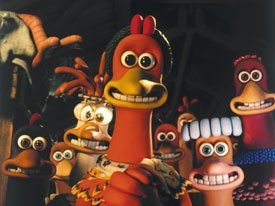
Waterstones Let The Fox Into The Chicken Hut


Today is a new dawn for UK Booksellling, as its premier retail chain Watersones, effectively handed over its digital if not its future to Amazon. We will read in the press how this is a logical move by Waterstones and is the dawn of a new ebook beginning under its new management, but some will now start to ask whether this is the end of the beginning, or in fact the beginning of the end? 
They first started their digital adventure with Sony. Sony themselves were bullish, gave Waterstone’s an exclusive window and spent heavy on advertising. It failed for many reasons; Sony didn’t have the content, the market wasn’t ready, the price wasn’t right, the stores couldn’t or didn’t want to sell digital, the eink devices by themselves were not the answer, etc. Waterstones then tried to accommodate all the eink ‘lookie likies’ and proceeded to badly merchandise the goods, failed to engage customers in store and as we previously wrote in our article ' Would You Buy an eBook Reader Off This Man?' , they made a hash of the opportunity. Now they have chosen to partner Amazon and their Kindle platform. 
We have to ask why they didn’t partner Barnes and Noble, not today but a couple of years ago, when a partnership could have been mutually beneficial. Imagine a situation today when you could have Microsoft, Barnes and Noble and Waterstones, all on the same team and remember Barnes and Noble and the Nook is virtually unknown outside of North America. Both Barnes and Noble and Waterstones could have kept their own customers and shared a Nook platform with a giant partner called Microsoft.
Imagine if they had chosen Kobo before everyone else did? Could they have done any better than WHS? They would have however chosen an international player and one with a heavy weight parent and importantly they could have probably retained their customers or at least limited the damage to digital.
What does Amazon have that Waterstones doesn’t have in the UK? A significant internet store that sells all books (used, rare,new), a growing publishing business, a self publishing business and growing affinity with authors, a customer mail list, demographics and data to die for, a viable audio book business in Audible, a successful internet book business in The Book Depository, an agreement with the major UK supermarket Tesco to sell Kindle,  a digital music offer, a digital on and off line film offer and now a High Street presence across 300 outlets and for what is probably ‘chump change’.
People have asked whether Amazon would open up physical stores, it doesn’t have to as long as stores such as Waterstones open their doors and let them in. Some would suggest that it is like letting the fox into the chicken hut and only time will tell what will happen. Maybe some will see it as a quiet reverse take-over without the exchange of shares and money. It will be interesting to watch how Waterstones shops now step up with renewed enthusiasm to sell themselves out of their digital future, give away their customers and even loose more physical sales. If Waterstones are unable to compete on price will the increased foot fall of folk coming in potentially once to buy a Kindle be enough to save all but a small number of their estate? 

Wednesday, May 18, 2011

‘Livres Modernes’ and ‘Livres Anciens’ in Lille


Having spent some 72 hours in Lille, the northern capital of France and Flanders we reflect not on the shopping, opera, marathon, Palais de la Beaux Arts, Wazemmes market, or even the fact that Saturday erupted as Lille beat PSG in the French football Cup Final but on books, bookshops and a different perspective on all things bookish.


First we had to visit Le Furet du Nord in Place du General de Gaulle. Billed as Europe’s largest bookshop it was like a Tardis and opened up into a cavernous space built cleverly around its central staircase with mezzanine floors, variable floor levels and all opening up into more and more ‘hidden’ rooms. Not since South Korea have we seen so many people enjoying a store. It was clearly more than just a bookshop with games, PCs, DVD, Music departments all attracting a young demographic. The books themselves were not overstocked and many enjoyed being faced out.


Not far away was what could only be described as the French equivalent to the UK bargain store ‘The Works’. In fact if we blinked we would have sworn it was the Works and it even had the blue signage. However, it was just books and very tidy. The shop itself was labelled ‘Le Discounteur De Livres Neuf’ but the books were still expensive compared to their UK equivalents.

Across from the Opera and our hotel was The Vieille Bourse, built in1653 as the old stock exchange, the central courtyard now operates as a rare, antiquarian and used book open market. A great location, stunning architecture, but still very expensive books.

Then there was the Euralille massive 90,000 square metre shopping complex between the two main train stations which housed a Carrefour hypermarket. Unlike US and UK free markets even the supermarkets can’t deep discount books in France. Undeterred, they still had a large section dedicated to books and all but thye best sellers were offered at 5% discount. So not being able to offer discounts didn’t deter Carrefour who probably still made sufficient turn on their footage and a healthy margin. If price maintenance were not in place these stores would obviously be more than capable of wiping out French booksellers.

Shopping in Lille is very European, closed on Sunday, often only open between 1400 and 1900 and even closed on Monday! Booksellers are no different!

Digital books didn’t appear to have reached Flanders and even Le Furet de Nord only had a small section, no bigger than the miserable space allotted by Waterstones. The selection of readers was almost identical and the attention given by staff also very similar. Interestingly, we saw no ereaders being used in Lille or on the Eurostar.


Finally, as if to remind us that we are in the 21st century there was the old bookshop of Emile Raoust & Co with the great signage above the door, ‘Livres Modernes’ and ‘Livres Anciens’, but inside the store now was a mobile retailer and the shop window no longer housed books but a big ad for an iPad2.

Europe is different and its culture is different and although change will happen but at its pace and within its cultural boundaries.

Next stop Oslo.

Wednesday, January 05, 2011

The Weakest Book Chain Link?


The demise of the current book chain channel is probably far more predictable than the demise of the independent bookstore. These retail giants now find their economic model being threatened and undermined and we have to ask if one chain is even one chain too many?

Interestingly the two who have both moved to the media centre ground Borders in the US and HMV /Waterstones UK are experiencing the most problems.

Borders now themselves in a world full of giant new entrants, who are redefining ‘big’ and making Borders and also Barnes and Noble look small. They now have internet competitors who have superior logistics and pricing and operate with less fixed overheads. Finally, they also find themselves threatened by supermarkets and low cost outlets who simply select better tighter ranges and do it cheaper. Some would say that chains must change if they are to avoid the fate of the old styled bookclub and others suggest that their model is beyond fixing.

Forget the poor Christmas trading period, miss mash of a digital strategy, web site crash these are just symptoms of a company that has lost its course in an ever changing market. Borders can refinance till the cows come home, but unless there is radical change it is in danger of just being another casualty of change.

As US publishers prepare to meet with Borders over the retailer's cash crisis, they carry the threat of them potentially putting the bookseller on stop. They also do so without their top attorney, Thomas Carney and SVP CIO Scott Laverty who both stepped down this week and it is also rumoured that these aren’t the only top casualties as boardroom knives get sharpened.

It would appear that it is in every publisher and distributor interests that Borders survives but if this becomes a slow death then some will not want to be left exposed. Credit insurance may protects some, but it doesn’t instil confidence and a retailer without sufficient positive cash flow to pay their way, either faces serious cut backs, or more often is a retailer on death row.

In the UK the HMV Group face; shares falling by some 24%, Christmas sales down 10%, weak profits and challenges over the servicing of a bank loan. On top of this gloom, this year it plans 60 store closures and also cut costs by a further £10 Million. They claim that the demand for CDs, DVDs and games was weaker than expected and that Waterstone's bookstores has performed and delivered unchanged results during the Christmas period.

It is fairly obvious that DVD, music and games are moving online and that others such as supermarkets are selling increasing numbers on a narrow range of titles. The days of high street video and music have gone, so chains who sought comfort in consolidating media space are now suffering.

However we now need to ask ‘who needs who?’ Is it better today to have a wounded Borders than a dead one, or a lop-sided HMV than a Waterstones damaged by friendly fire?

Can the US market take out the number two bookstore and some 676 stores and not feel the fallout? What would happen in the UK if Waterstones was forced to shrink and Waterstones become a media store in order to protect the HMV Group? Any reduction in book shelfspace in either market will be significant and the fallout may not benefit others in the High Street but further strengthen Amazon’s appeal to consumers and power over publishers.

All chains are only as strong as their weakest link.

Finally, we are entering a era where there will be even more books competing for eyeballs, dollars and shrinking shelfspace. Sale or return works if one has a balance of hits, also rans and misses but if that balance becomes unstable then publishers’ models will increasingly become challenged.

Sunday, January 17, 2010

Where Did All The Music Retail Go?

We often are asked why we think that bookstores can survive better than their counterparts in music? We have said that many will not adapt and cling to the sale or return me to model and perish. However we strongly believe that the booksellers who adapt, specialise, grow their customer knowledge and community pull can survive. Bookstores today need to be open to selling books, new, old, used, and remaindered, alongside other book related goods.

If you think this is bad advice we suggest you watch this Sky News video.

Monday, October 12, 2009

Is Book Retailing Predicable?

So as we have been thinking a lot about music and the retail impact of digitization, we now wonder what will happen to bookstores in the future. Many accept that big is good, or inevitable, but then scream when they see that could mean just Amazon and Google. The Booksellers Association where right to object to Margret Hodge’s library dream factory and its thoughts on libraries competing head on with retail in selling books, but it will not go away without action. Some believe that the independent bookstore is dead, but then many have thought that for many years so what has changed.

What we see first is that universal consolidation that has decimated the music retail world with many big and small going to the wall. A hardcore of music stores remain and will always do so for these are real music stores, respected by their consumers and offering value added service. However those who were mere franchises for the labels, opening their doors and allowing the reps to merchandise their shelves have mainly gone. The same will happen with books and a continued belief in ‘sale or return’ will start sort to out the bookstores from the hobbyists.

So if we look at Music today we see Spotify, iTunes, Napster, Sky, Nokia and many new names entering the streaming and download world and Amazon, Walmart and big boys dominating the physical world. Why should books be any different? So we swap in Amazon, Google, Sony, B&N, throw in some aggregators with a white label offer such as Overdrive, Ingram etc. Then in the physical world there is Amazon, B&N, Waterstones, Book Depository and of course supermarkets and special sales channels such as the Book People. It may be different names but they share a lot of similarities.

So how do bookstores survive what is clearly going to be a hard winter?

We suggest by being bookstores and retailers and stop chasing the best seller rabbits that were never geared for them. Start to understand it’s not just about front and back list but books, old, used, remaindered, whatever. It’s about selection not based on the safety net of no risk returns, but on sale through and risk. It’s all about knowing the audience and where appropriate specializing and even creating vertical product sales. It’s about community reach and all the things that have been written by many and practiced by few.

Why are we so hard on bookstores if we believe that they are an endangered species? The answer is simple – we want them to survive, but to do so they have to think and act differently. Should they do other publishing roles such as run festivals, publish, reprint, package? It will work for some but not many. Should they embrace digital or leave it to the big boys like they left the internet to Amazon?

You can’t tell a retailer how to retail they have it or they don’t.

Take publisher branding which scores very low in the consumer world. Why not put all the penguin books together, all the HarperCollins ones together and forget that they all must be A-Z. The books may look pretty as a collection and appeal even more that the jumbled up different sizes, colours and designs we see on a shelf today. Why do books have to be spine out – if it’s just down to space fine, but stocking more inventory, more densely, doesn’t guarantee more sales – think about it. Shop windows and interior design layout is usually predicable, boring and clearly lacking imagination. Some excel and really make the effort others just put up shelves and fill them.

We can’t prescribe what to do but we can predict the potential future and more of the same isn’t going to change current trends and our following other sectors such as music.

Wednesday, July 22, 2009

On Target

What makes a best seller? Is it stacking it high on sale or return in bookstores, is it a good review in the best newspaper or the kiss of Oprah, is it the right price offer? All these help and marketing sells books, but often the focus is still on that 13 week window and then it moves onto the next bestseller. Does the consumer know what is front list and in many cases do they care?

Michael Cader introduced us to a New York Times report on, ‘Target Can Make Sleepy Titles Into Best Sellers’ which was about how outlets such as Target can make significant sales on what would appear to be failures. By selecting a title as one of its Bookmarked Club Picks, the book gets prominent display throughout the chain’s stores and sales follow. Players such as Target can also benefit under the special sales umbrella, buy into print runs, take a minimised risk and enjoy a calculated return.

Target, Wal-Mart and Costco have a proven ability to sell significant quantities of books and often trade on high profile titles such as Harry Potter. However, Target has been quietly building its book club, a program it calls Bookmarked Breakout, and promoting and selling largely unknown writers. Target’s 1,700 stores carries about 2,500 titles each, are of a predictable range of genre and interestingly are faced out (so much for publisher brand). The book club promotions are house are set apart often at those important end of aisles.

In some cases Target sales outstrip any other outlet and Jacqueline Updike, director of adult sales at Random House says, ‘Target can sell hundreds of thousands of copies of a book that is virtually unknown in the rest of the marketplace.”

Target select and sell like a bookseller should using a panel of Target employees who meet monthly to review submissions from publishers. The panel may select classics, unknown authors or bestsellers and the publisher is asked to produce a special edition, and the author requested to write a letter addressed to Target readers.

We often deride the large mass market retailers but we forget that the reason they are where they are is that they understand retail; selection, marketing and selling.

Wednesday, May 13, 2009

Brave New World Revisited Part 1: Are we all Participating

There have been some interesting debates in the blogshere and over emails about what appears to be the threat of the new entrants and the overall balance of the publishing marketplace. These are not new and were well documented in our Brave New World report close to 3 years ago. What is now new is that the reality is starting to happen, changes are starting to be seen and the industry is now starting to wake up and smell the coffee.

So what are we talking about? Today we look briefly at the independents’ digital opportunities

First, there is contrary to many beliefs a real place for the independent bookseller in the digital marketplace but they need to want to participate and be allowed to participate. There are no free lunches and natural extensions of the physical world. Equally those who believe that the independents can’t participate or wish to steal their market better wake up and think about how they bridge the revenue gap – if you take out your existing channel you take out your existing revenues. You may not like who you have to do business with tomorrow.

Second, unless the digital divide between those who can and those who aren’t allowed is closed then the digital divide could come home to bite all. Publishing has long been said by some to be like spread betting you place many bets and hope that the overall receipts will outweigh the bets placed. When you narrow the market then spread bets become harder and mistakes a lot more painful. By retaining and supporting the existing channel we can ensure options are not closed down. The digital age gives us the ability to create a level playing field but all too often we choose the technology to narrow and close down the field.

Third, Digital is good and can live alongside physical. They are only mutually exclusive if we want them to be. Yes, digital may reduce the effectiveness of a general offer but it can also reduce the effectiveness of a vertical one. Those who advocate either or, do not respect that the world is not binary today, nor tomorrow. Digital offers booksellers and librarians the real opportunity to engage, add value and develop their communities but if all is achieved is a ‘white label’ web site they have failed miserably. That doesn’t preclude them from selling white label stock, that’s a given, but giving away their customers or treating them as mere distant buyers is not a wise course to pursue.

Fourth, price matters. Of course consumers will always be drawn to price but this tends to be for know items not browsing. So the key is to capture the browser, the impulse buy and keep hold of him and use the bookselling skills to sell to him irrespective of price but built on trusted relationship.

The Brave New World report has so far failed to deliver its promise. Some may say it couldn’t work and the cards were stacked against it, others will point to the infamous BA conference walk-out and the bad positioning of some of the follow-up process, others to the power of the new entrants, some would suggest the folly of exclusive and marginalised deals etc. We believe that only today with the imminent roll out of inclusive and not exclusive services such as Gardners Digital Warehouse in the UK, do we see a opportunity for all to participate. However, even as we write some may suggest that there are rules set for some that are not being allowed for others.